At first glance, the horrific events of Jonestown might appear straightforward, yet the implications and underlying politics offer a much richer narrative. On November 18, 1978, over nine hundred members of the Peoples Temple, primarily Black Americans from the San Francisco Bay Area, perished in an agricultural commune in Guyana, mischaracterized as a mass suicide. Using a concoction of poison mixed with a powdered drink, victims were compelled into their fate under the authority of Reverend Jim Jones, whose narrative of an impending U.S. government onslaught fueled his followers’ despair.
The complexity of this tragedy transcends simplistic labels of "cult" or "mass suicide." Many of those at Jonestown didn’t willingly choose this fate; the grim reality involved coercion and the presence of armed guards. A considerable number of syringes among the remnants of plastic cups suggested that choice, as it was understood, was manipulated under duress. And while the aftermath became a focal point for various morbid theories—cult mentality, leader-worship—the deeper political and social currents that facilitated Jones's ascendance often remained overlooked.
This is where Shiva Naipaul’s work, Journey to Nowhere: A New World Tragedy, takes on significance. Published in 1982, it challenges the sensationalist narratives of the time. Naipaul—while often in the shadow of his more famous brother, V.S. Naipaul—offers a piercing analysis of Jonestown as a stark political disaster rather than merely a tale of fanaticism. His critique centers not just on the victims but on the ideologies that empowered Jones, scrutinizing those who supported him from a distance without accepting responsibility.
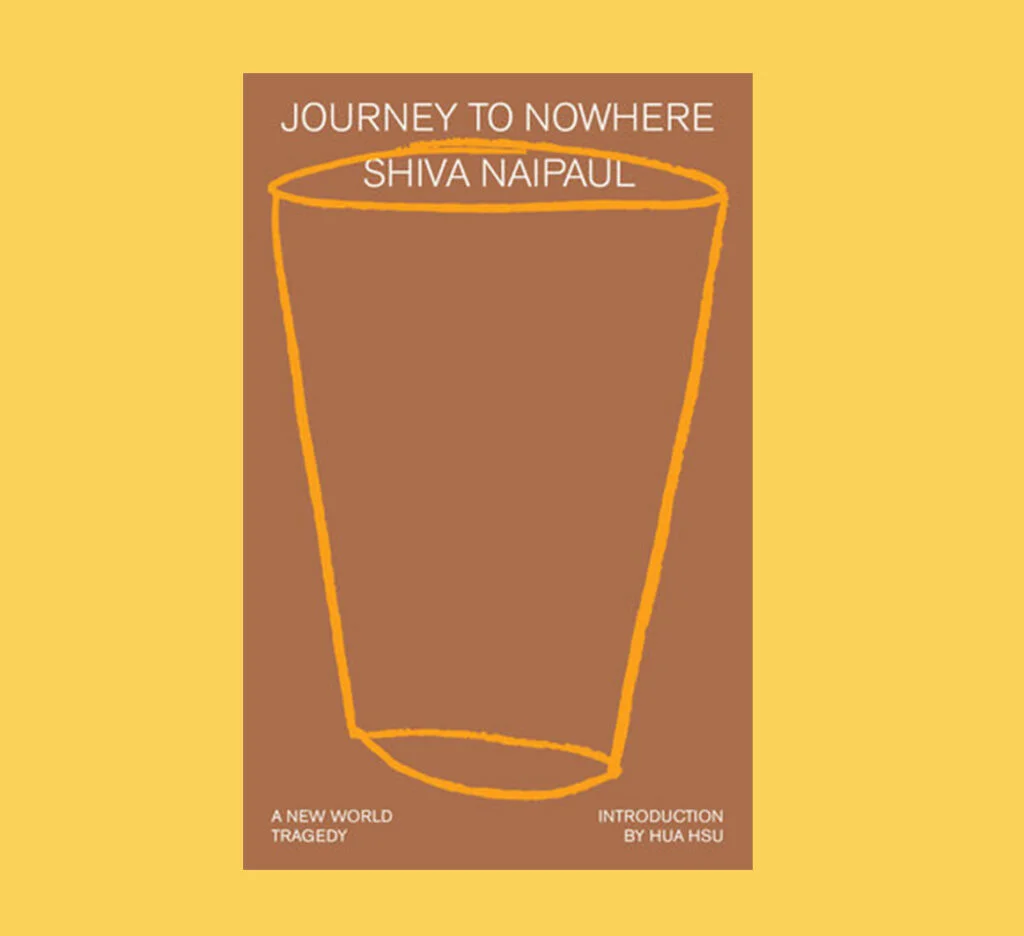
Journey to Nowhere by Shiva Naipaul. Outsider Editions.
Naipaul's narrative is driven by his moral indignation and profound skepticism. Unlike many contemporaneous accounts that fixate on the gruesome outcomes, Naipaul probes the ideological foundations that led to such tragic realities. His intense scrutiny of the political landscape reveals correlations between the People’s Temple and the governance of Guyana under President Forbes Burnham. Both operated under a veneer of utopian promise while masking authoritarian control. Naipaul's examination deftly illustrates how these two entities intertwined, culminating in a catastrophic feedback loop that facilitated a tragedy of this scale.
The striking parallels between Jones’s brand of messianic fervor and Burnham’s leftist aspirations come to the forefront in Naipaul’s analysis. Burnham, originally installed by the CIA, embraced a hodgepodge of ideologies—militarism and Black Power among them—that reverberated with the promises of salvation Johnson extended to his followers. "Jim Jones built his movement on the debris of the sixties," Naipaul writes, indicating that the sociopolitical climate allowed a demagogue like Jones to flourish in the first place.
Naipaul’s keen observation extends to the American context, where Jones skillfully melded sixties activist fervor with his warped ideology to establish the Peoples Temple as a significant force in California politics. Utilizing voter turnout strategies, he became a politically relevant figure among Democrats, thus attracting the attention and backing of various political leaders—including then-mayor George Moscone and Harvey Milk. Yet, the complicity of these figures in enabling Jones’s ascent raises troubling questions about accountability and the easy amalgamation of political advocacy with personal ambition.
However, Naipaul’s lens doesn’t solely critique Jones or Burnham; he also chastises the radicals who celebrated Jones’s revolutionary image. Leaders like Huey P. Newton lent their legitimacy to Jones, only to later witness the co-opting of their radical ideas into a destructive agenda. Naipaul's confrontation with Newton reveals the complexity of allyship in activism—a theme often neglected in conventional narratives around the tragedy.
Nevertheless, Naipaul’s critique is not without its limitations. His disdain for the ideologies he critiques often leaves little room for understanding the motivations of the broader community that constituted the Peoples Temple. Many followers were drawn not just by ideological loyalty but by their desperation for community and belonging, a nuance Naipaul observes but doesn’t fully excavate. His reflections evoke the sentiments of Edward Said, who noted that travel writers can sometimes lack the deep understanding of their subjects that might provide clarity in complex socio-political situations. In this sense, Naipaul’s travel through the chaos of Jonestown may fall short of painting the full picture.
As one might expect, the writing of Journey to Nowhere took a psychological toll on Naipaul. The visceral nature of his experiences left him feeling subdued for a time—a fact echoed by friend Paul Theroux. This personal struggle speaks volumes about the weight of the tragedy he confronted. The haunting imagery of a place where “bodies lay piled three or four deep” stuck with him long after he left that austere landscape.
Tragically, Naipaul's life was cut short at the age of 40, but his reflections offer critical insights not only into Jonestown but into the broader implications of ideology, leadership, and community in times of crisis. One can’t help but wonder how his literary voice would have evolved, especially given the chance to confront the disillusionment that colored much of his early work—the cynicism that often overshadowed the latent curiosity and moral engagement that drove his earlier writings.
The legacy of Naipaul's work, especially as new generations review the complex intersections of Jonestown's tragedy, serves as a stark reminder of the interplay between ideological movements and their often-overlooked impacts on vulnerable communities. The lessons from this catastrophic event extend far beyond its superficial narrative, challenging readers and scholars alike to engage deeply with the political and social undercurrents that sometimes shape history’s most tragic outcomes.
***
Andrew Holter is a writer and historian, and the editor of the Murray Kempton collection Going Around: Selected Journalism (Seven Stories Press). His work has appeared in The Baffler, Boston Review, The Nation, Rolling Stone, The Times Literary Supplement, Places Journal, and The Drift, among others.