The RealReal, a leading player in the luxury resale market, highlights a notable shift toward emerging designers in its recently published 2026 Resale Report. This trend demonstrates that consumers are increasingly interested in discovering new names alongside established fashion houses, marking a significant departure from traditional retail dynamics that favored long-standing brands.
Emerging Designers: A New Age of Discovery
Noelle Sciacca, The RealReal’s associate director of fashion merchandising and content strategy, emphasizes the role of resale as a catalyst for emerging talent. "Resale is a really interesting discovery engine for emerging designers," she shared, pointing to the metrics the platform uses, such as search volume and user favorites, to gauge rising interest. This perspective aligns with a broader trend where younger consumers seek authenticity and originality in their fashion choices, making platforms like The RealReal invaluable for both shoppers and designers.
This shift isn't merely qualitative; it's backed by quantitative data. Platforms like The RealReal are redefining the way consumers interact with brands. The user engagement metrics indicate that clients are not just passively browsing but actively seeking out new talent. New designers can now gain traction without the traditional barriers often posed by high-entry retail spaces.
Among the standout names is New York-based Henry Zankov, whose knitwear brand has amassed over 11,000 user "obsessions" for a modest inventory of 64 pieces. That’s impressive—especially since it may reflect a burgeoning recognition not just of Zankov's work but also of the current cultural zeitgeist that prizes individuality. His recent appointment as the artistic director of Diane von Furstenberg has likely boosted his brand's visibility, a testament to the interconnectedness of media attention and consumer interest in a designer's profile.
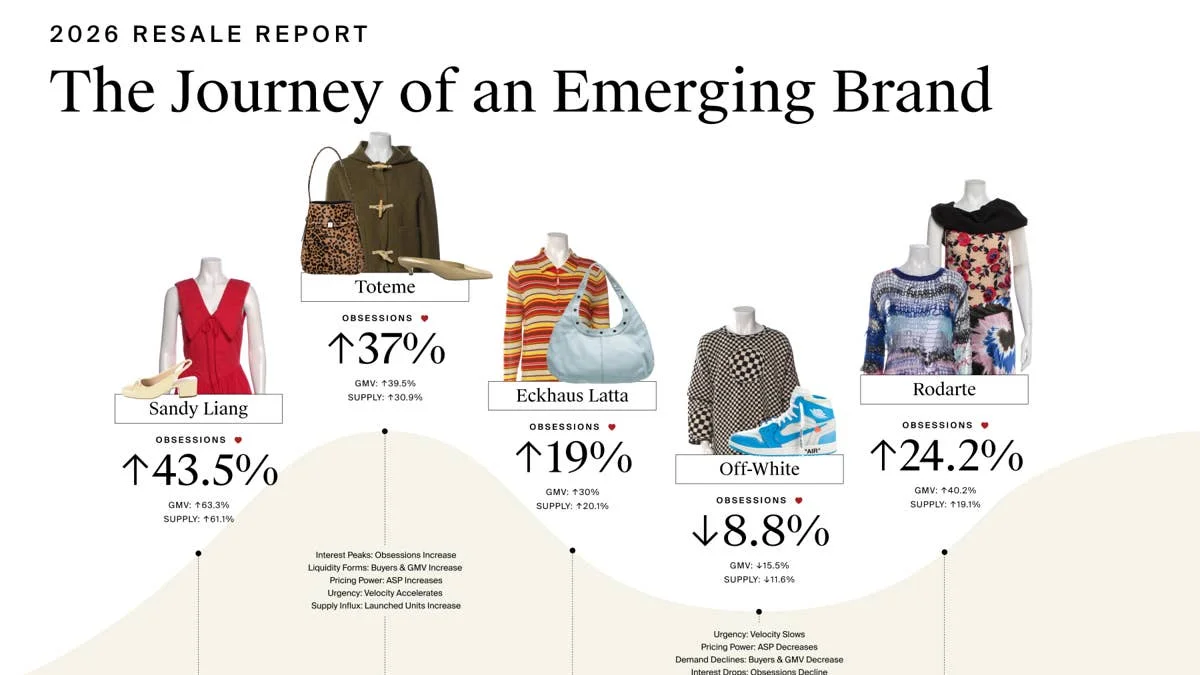
Photo: Courtesy of The RealReal
Rising Brands: Trends in Engagement
Following Zankov, other emerging brands are also seeing tremendous growth. Heirlome recorded a 7,000 obsession count for its 65 items—up 165% year-over-year—while Rùadh's 85-piece collection garnered over 2,300 obsessions, reflecting a staggering 432% year-on-year increase. Brands like Sandy Liang, Toteme, Rodarte, and Eckhaus Latta are also enjoying elevated user engagement, indicating a broader trend of consumers leaning toward independent brands. This trend points to a shift in what luxury signifies; it’s less about established names and more about how brands resonate with consumers on a personal level.
The data isn’t just about popularity metrics; it reveals a demand-supply imbalance for several brands, including Ssstein and A. Presse. "That imbalance is really interesting," Sciacca noted, suggesting an active audience searching for these designers even when the product is limited in the secondary market. This creates a sense of urgency among buyers and highlights a growing disparity between what designers produce and what consumers wish to buy.
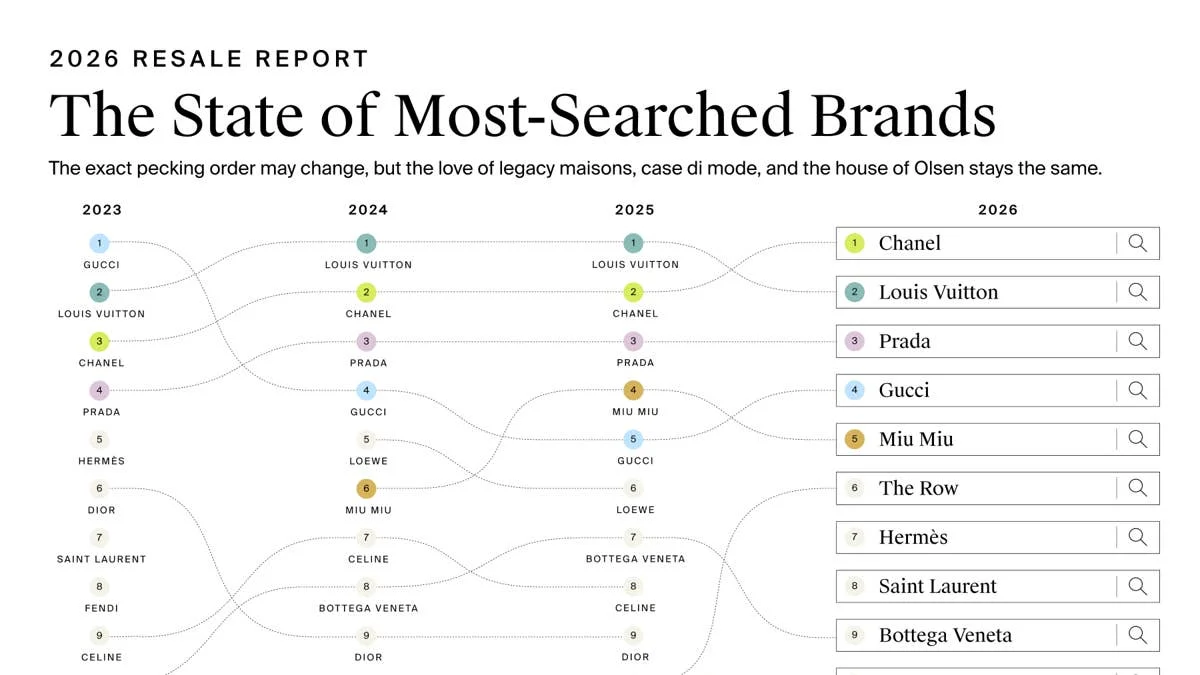
Photo: Courtesy of The RealReal
The Established vs. Emerging: A Tightrope Walk
Despite the ascendancy of newer designers, established luxury brands maintain a stronghold in the resale sector. Chanel recently reclaimed its position as the most-searched brand on The RealReal—overtaking Louis Vuitton—after a notable sales surge attributed to Matthieu Blazy's impactful debut. The see-saw between established houses and newcomers serves as a reminder of the complicated dynamics at play in the luxury market. Additionally, Prada continues to hold steady in third, with Gucci and Miu Miu not far behind, illustrating that legacy often offers a brand resilience that emerging designers are still striving to achieve.
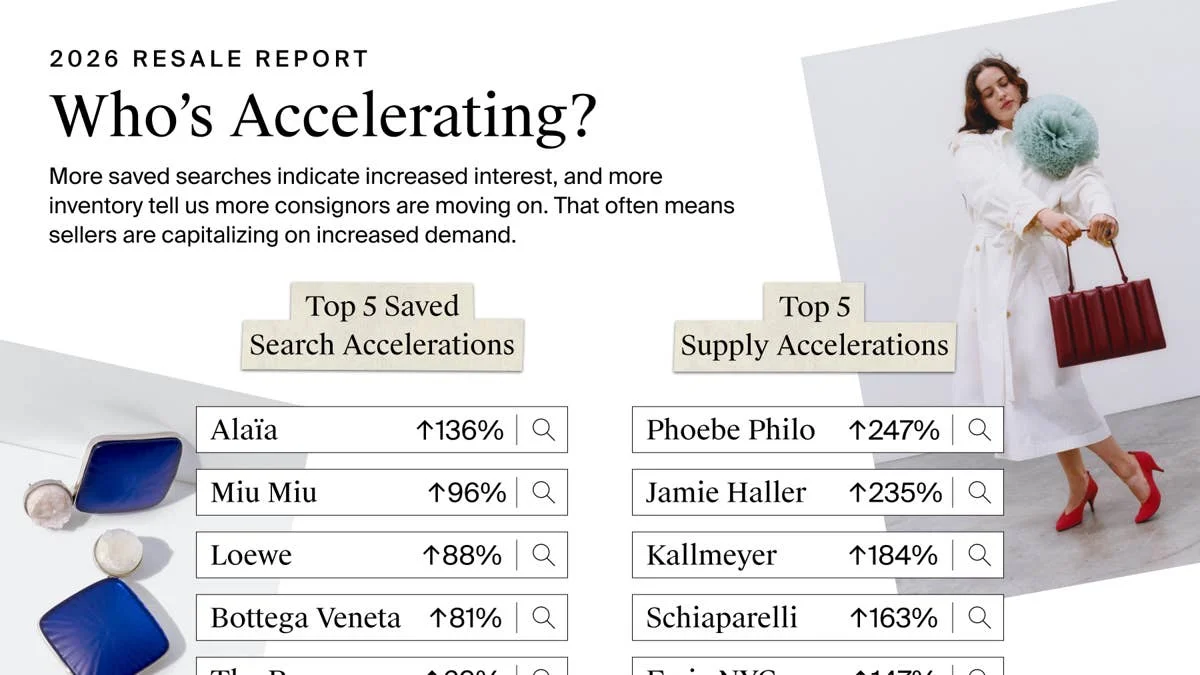
Photo: Courtesy of The RealReal
The RealReal’s analysis shows that brands like Alaïa are experiencing heightened interest with a 136% increase in saved searches. Furthermore, brands such as Phoebe Philo and Jamie Haller are seeing notable rises in their available inventory, indicating that they are starting to gain traction in both consumer consciousness and the resale market. The mix of established names capturing new interest and emerging brands rising in popularity creates a compelling narrative that could redefine what we understand about luxury shopping.
The Broader Impacts of Resale Trends
As primary market prices continue their upward trend, resale shopping is increasingly attractive, particularly among Gen Z consumers. The secondary luxury market is reportedly expanding at two to three times the rate of the primary market, signaling a shift in purchasing behavior that can alter the retail landscape in profound ways for luxury brands. What this means for you is that resale platforms could soon command a larger piece of the pie, morphing into primary points for discovery.
(and this is the part most people overlook)
Vintage items, in particular, are driving this surge, with an extraordinary demand increase from 2020 to 2026. Sciacca attributes this to not only nostalgia but also a yearning for individuality in a market often filled with uniformity. Consumers want items that tell a story—pieces that reflect personal style rather than mass-market trends.
Interest in specific vintage eras, particularly the 1990s and early 2000s, is surging, marked by rising searches for iconic names like Phoebe Philo and Nicolas Ghesquière. Additionally, there's a growing curiosity for vintage styles from the early 20th century, evidenced by demand for figures like Fortuny and John Galliano. This trend points to a deeper cultural yearning for identity and uniqueness, aspects many current fashion offerings seem to lack.
“What’s really interesting is how more knowledgeable and intentional shoppers have become,” Sciacca explains, noting the increasing significance placed on an item's history and unique qualities. As fashion evolves, resale is emerging not just as a cost-effective avenue but as a means for individuals to articulate their personal style. The implications extend beyond just the choices consumers make; they suggest a potential for shifting the entire retail model. Emerging designers have the opportunity to disrupt norms while established brands scramble to either adapt or risk irrelevancy.
To discover more insights and trends, you can read The RealReal’s full report here.