July kicks off with an exciting announcement from the Council of Fashion Designers of America (CFDA), unveiling the preliminary schedule for the Spring 2027 season of New York Fashion Week (NYFW), slated for September 10 through September 15. This event remains a showcase for both established and emerging designers, solidifying its position as a key event in the fashion calendar.
The Historical Significance of NYFW
NYFW, regarded as one of the "Big Four" fashion capitals, has a storied history. It was initiated in 1943 by Eleanor Lambert as "press week," a strategic move to gather attention for American designers during World War II when European fashions were hard to come by. In 1945, Ruth Finley took things a step further by launching the Fashion Calendar, offering a structured schedule that helped catalyze the fashion industry's growth. After nearly 70 years, the CFDA took charge in 2014, which has shaped the event into a platform fostering creativity and innovation.
As the fashion industry evolved, NYFW's relevance has been tested, especially with the rise of global fashion weeks and digital platforms that have expanded how collections are presented and viewed. The emergence of livestreaming and social media has transformed the traditional runway, allowing mass audiences to engage with collections in real time. Nevertheless, NYFW remains pivotal, holding a nostalgic space for designers and industry professionals alike.
Key Highlights of the Season
This season promises 70 official runway shows and presentations, featuring a mix of renowned names including Altuzarra, Anna Sui, Calvin Klein Collection, Carolina Herrera, and Christian Siriano, among others. Brands like Ralph Lauren and Coach will parade their collections on the eve of the official opening, creating a buzz even before the official schedule begins. What’s more, Marc Jacobs has already given attendees a sneak peek of his collection on June 29, suggesting that anticipation for this year's show is already building.
On September 10, Diane von Furstenberg will introduce the first collection from its new Artistic Director, Henry Zankov. The appointment is significant, though it comes with its challenges; transitioning a legacy brand while maintaining its core identity is a careful balancing act. Thom Browne will close the event on September 15. This flow of big names at both opening and closing creates a dynamic atmosphere, which should amplify the week’s energy.
Several designers will appear for the first time, including Benjamin Seidler and Sabyasachi by Sabyasachi Mukherjee. This infusion of newcomers is not only refreshing but also reflects the CFDA's commitment to elevating diverse voices in fashion. Alongside these debuting talents, the presence of 2026 CFDA/Vogue Fashion Fund finalists like Jamie Haller and Milamore will provide a necessary bridge between emerging ideas and established fashion norms. The mix of familiar names and new talent ensures that NYFW is not stagnant; it continually adapts to the changing zeitgeist.
Official Schedule Overview
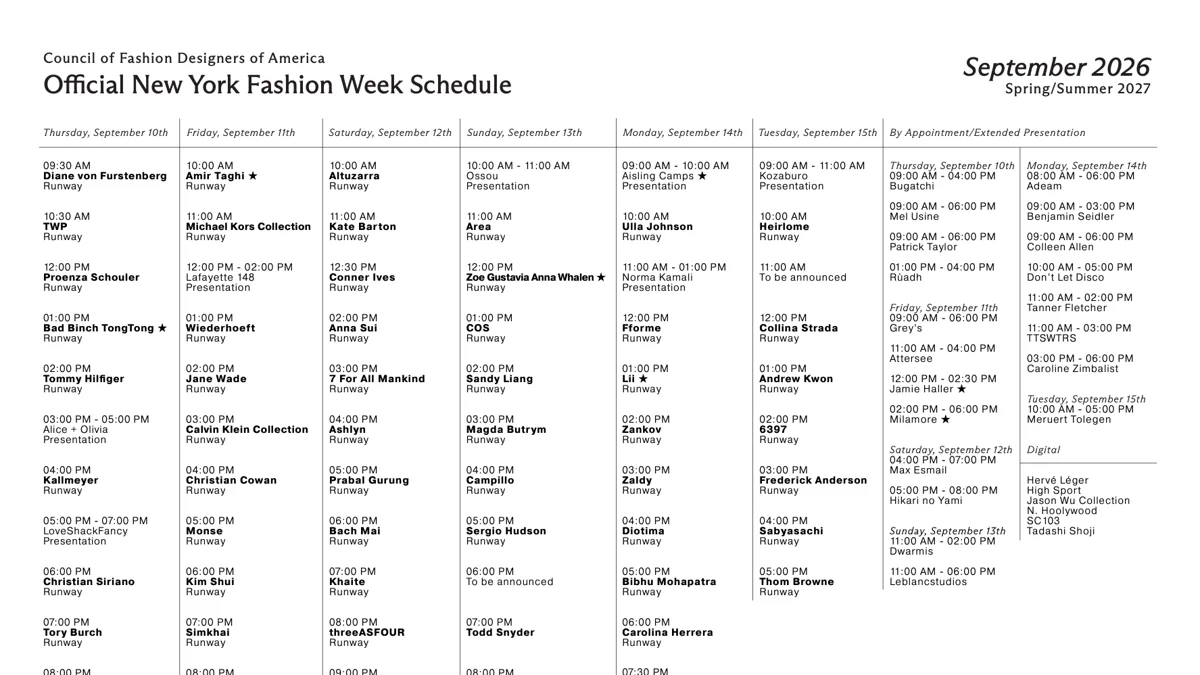
Photo: Courtesy of the CFDA
The Implications for the Fashion Industry
New York Fashion Week serves as more than just a display of clothing; it’s a bellwether for the fashion industry. With its keen ability to reflect cultural shifts, trends emerging during NYFW can influence the market for seasons to come. For instance, sustainability and inclusivity have been major themes in recent years, and these trends are likely to resonate through the collections presented this fall.
If you're working in this space, paying attention to the narratives that brands choose to tell through their designs can help inform broader industry conversations. The fact that both new and established designers will showcase their work together underscores the ongoing dialogue between tradition and modernity—an essential aspect of fashion's evolution.
Yet, the fashion week model itself faces scrutiny. Some argue that the traditional runway shows are becoming less relevant, overshadowed by direct-to-consumer models. And this is the part most people overlook: while designers continue to invest heavily in their runway shows, they must also adapt to changing consumer behaviors, particularly given the acceleration of online shopping.
As this season unfolds, keep an eye on how brands navigate these tensions. Their approaches could reveal much about the future direction of fashion as an industry and an art form. The stage is set, and the pressure is on. We’ll see who rises to meet the moment, and who falls short.